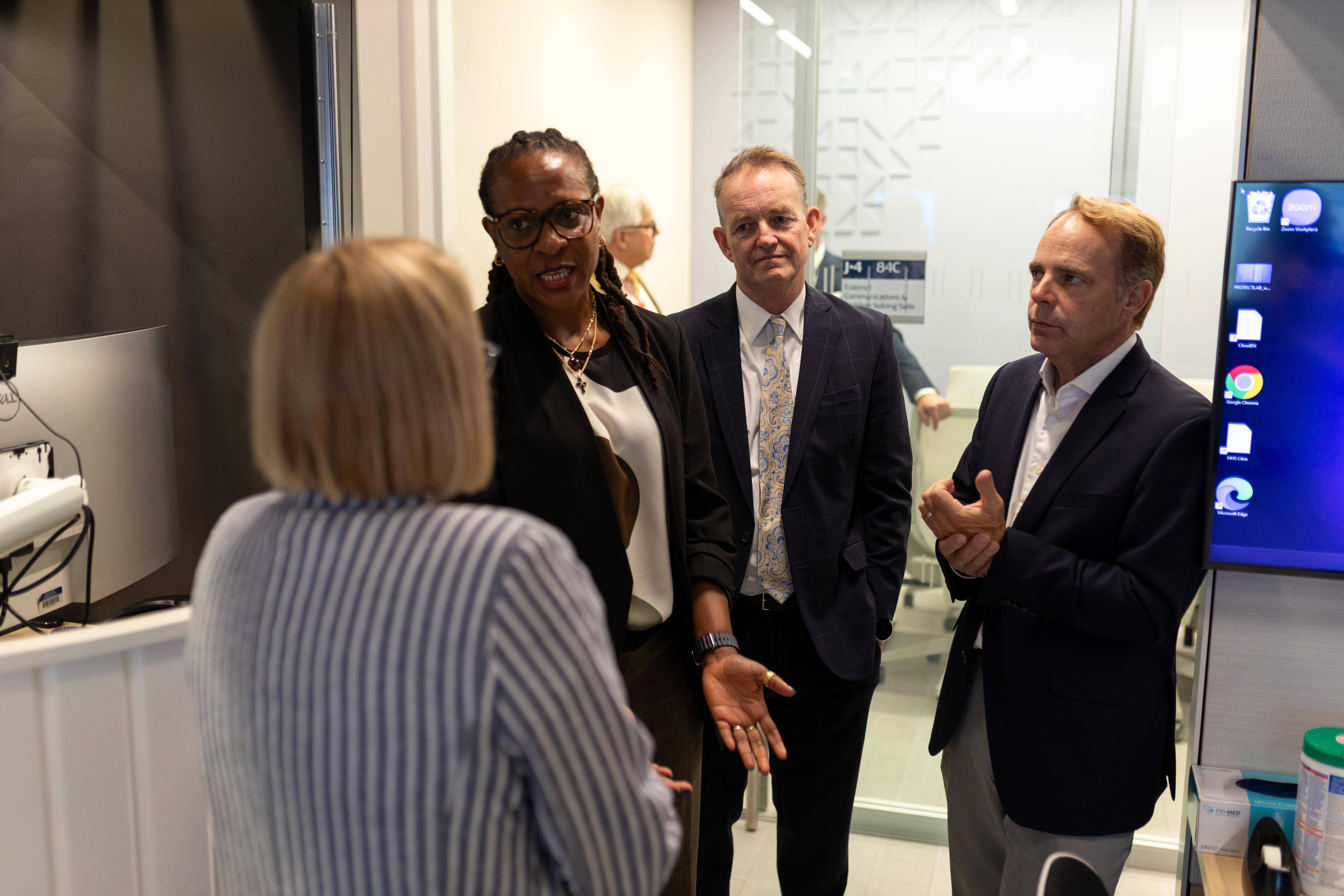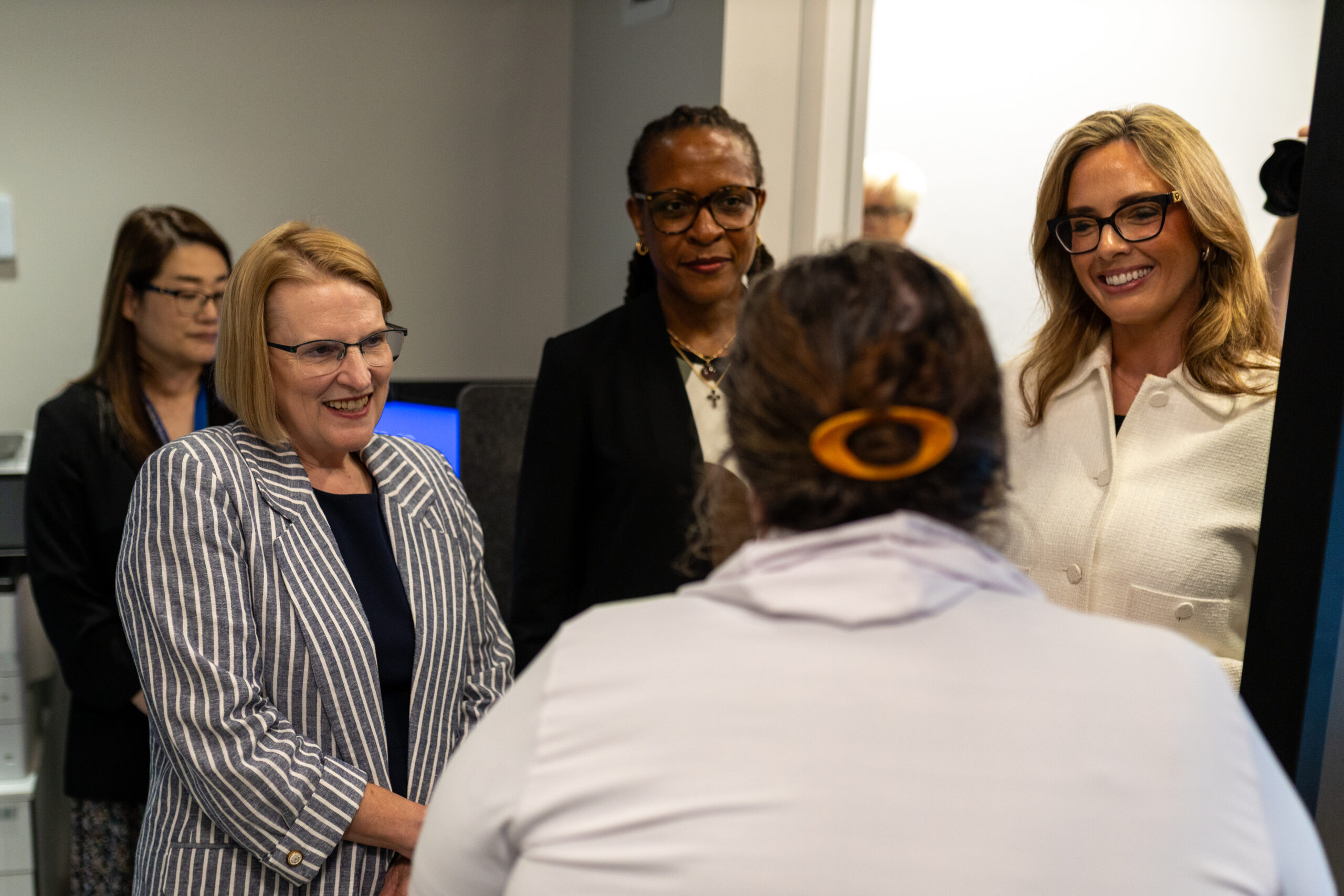
The PROTECT Lab, a joint initiative of the Population Health Research Institute (PHRI), McMaster University and Hamilton Health Sciences (HHS), welcomed Ontario’s Deputy Premier and Minister of Health Sylvia Jones, along with Minister of Sport and MPP for Hamilton East-Stoney Creek Neil Lumsden and Hamilton Mountain MPP Monica Ciriello on July 22. The visit included a tour of the lab and a closer look at how virtual care and remote monitoring help patients recover safely at home after hospitalization.
During the tour, the group met with key leaders for the lab and partner organizations, including Mark Levine, one of the lab’s principal investigators and professor emeritus in McMaster University’s Department of Oncology and an HHS Distinguished Scientist; Sandra Ofori, co-lead of the lab’s postoperative virtual care research program and PHRI scientist; Ted Scott, chief innovation officer and director of CREATE at HHS; Aaron Levo, vice president of people and culture at HHS; and Jennifer Lounsbury, chief nursing information officer at HHS. They were joined by Anthony Kaul, founder of Cloud DX, and Jaide Kassam of Amir Remtulla & Associates.
The visitors learned how the lab uses virtual care and remote monitoring to support patients recovering at home after surgery, reducing hospital stays and avoidable readmissions while increasing capacity within the healthcare system.
Supporting patients beyond the hospital walls
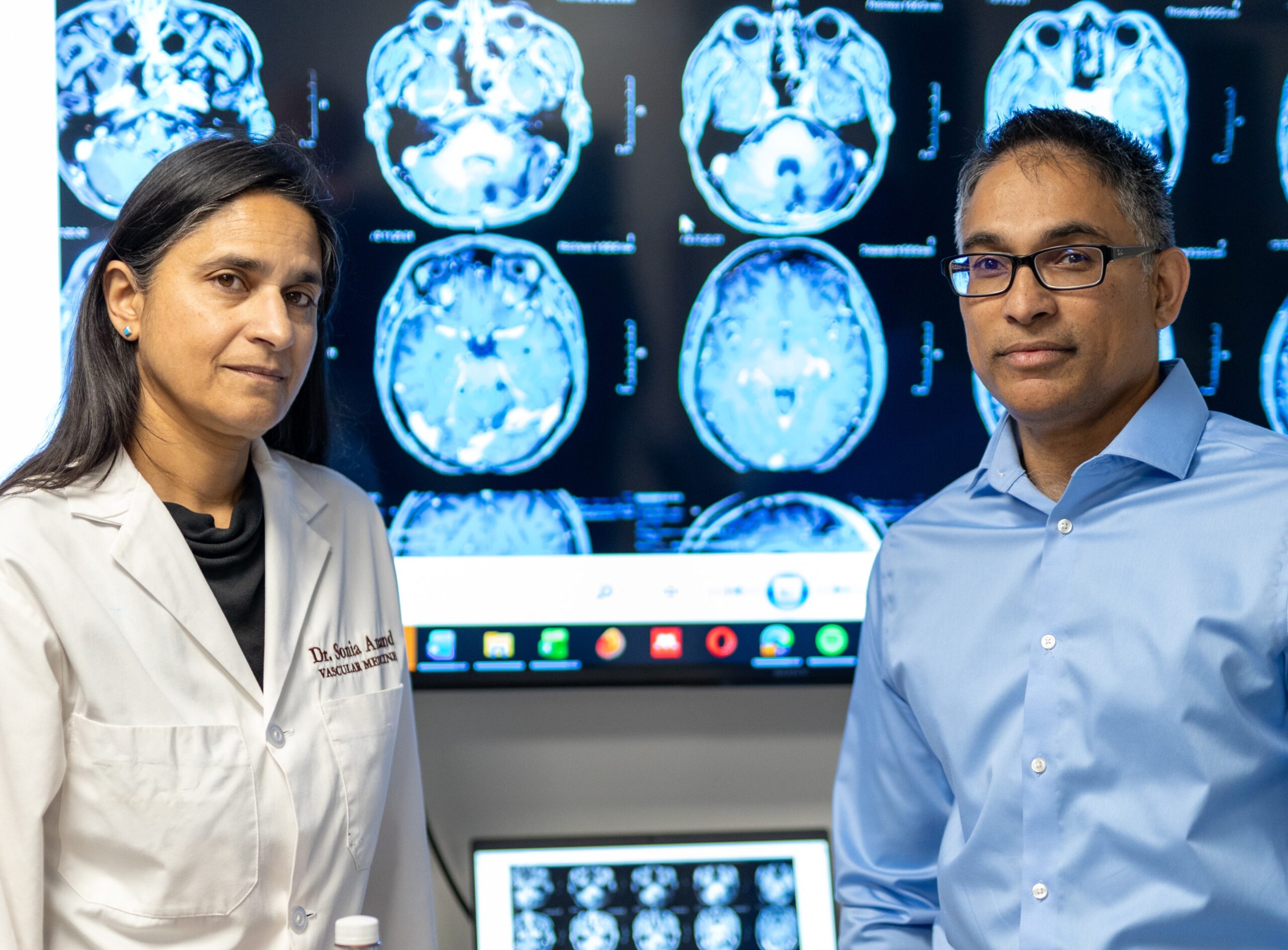
The PROTECT Lab – short for Improving Perioperative and canceR Outcomes Through Excellence and appliCation of Virtual Technologies – helps health care teams and researchers study and deliver virtual care. Located at HHS’ Juravinski Hospital and Cancer Centre, the lab is led by Michael McGillion, a PHRI scientist, acting vice-dean in McMaster University’s Faculty of Health Sciences and executive director of the McMaster School of Nursing; P.J. Devereaux, PHRI deputy director and senior scientist, director of the Division of Perioperative Care at McMaster University; and Levine, a medical oncologist.

PJ Devereaux
“As physicians and researchers, we’re always looking for ways to support patients beyond the hospital walls. At the PROTECT Lab through remote monitoring technology and direct access to the care team, we can better support patients during recovery and intervene earlier when concerns arise,” says Devereaux.
The PROTECT model may have important implications for cancer care, where patients often require ongoing support during systemic and radiation therapy and follow-up care.
“Cancer treatment can be a long journey for patients and families. Virtual care allows us to stay connected, answer questions, address concerns, and provide ongoing support between clinic visits, helping patients feel more confident and supported throughout their care,” says Levine.
Patients enrolled in the program use tablets and monitoring devices to track and share how they are feeling and health information such as blood pressure, heart rate, and oxygen levels from home. The technology, provided by Canadian health technology company Cloud DX, allows nurses at the lab to review the information in real-time and communicate with the patients directly and escalate care to perioperative physicians. The nurse-physician dyad model is a key component of the virtual care monitoring program. The data collected also helps researchers better understand how this type of care affects recovery and wellbeing.
“The future of health care is not simply more virtual visits, it is continuous, data-informed care that follows patients wherever they are,” says Scott. “Through the PROTECT Lab, we are showing how remote monitoring, digital health technologies, and clinical innovation can work together to improve patient outcomes, increase access to care, and reduce pressure on hospitals.”
“By shifting care from reactive to proactive and from hospital-centric to patient-centred, this model helps protect Ontario’s health care capacity while creating a more sustainable, responsive, and connected health system.”
The visit highlighted how the PROTECT model of care helps identify health concerns and supports timely intervention. This can reduce hospital readmission, help patients recover more quickly from surgery, and free up hospital beds for those who need them most. Discussions also focused on the close collaboration between nurses and physicians, and how regular communication with patients can address concerns early, reduce anxiety, and improve access to care when needed.

Sandra Ofori
“We were pleased to welcome Minister Jones to the PROTECT Lab and highlight the impact of this program not only on patients and families, but also on our understanding of new approaches to care,” says Ofori.
Generating evidence for better care
The lab’s postoperative virtual care research program is led by McGillion, Devereaux and Ofori, who is also an assistant professor at McMaster University and cardiologist at HHS. Together, they are leading several PHRI clinical trials including PVC-RAM-2 and PVC-RAM-3. These studies are looking at whether remote monitoring can help patients recover more efficiently after surgery by identifying complications early, reducing repeat hospital visits, and improving recovery at home.
Later this year, two cancer studies will examine whether virtual care and home-based monitoring can shorten hospital stays for patients undergoing CAR-T therapy and reduce clinic visits for breast cancer patients receiving systemic treatment.
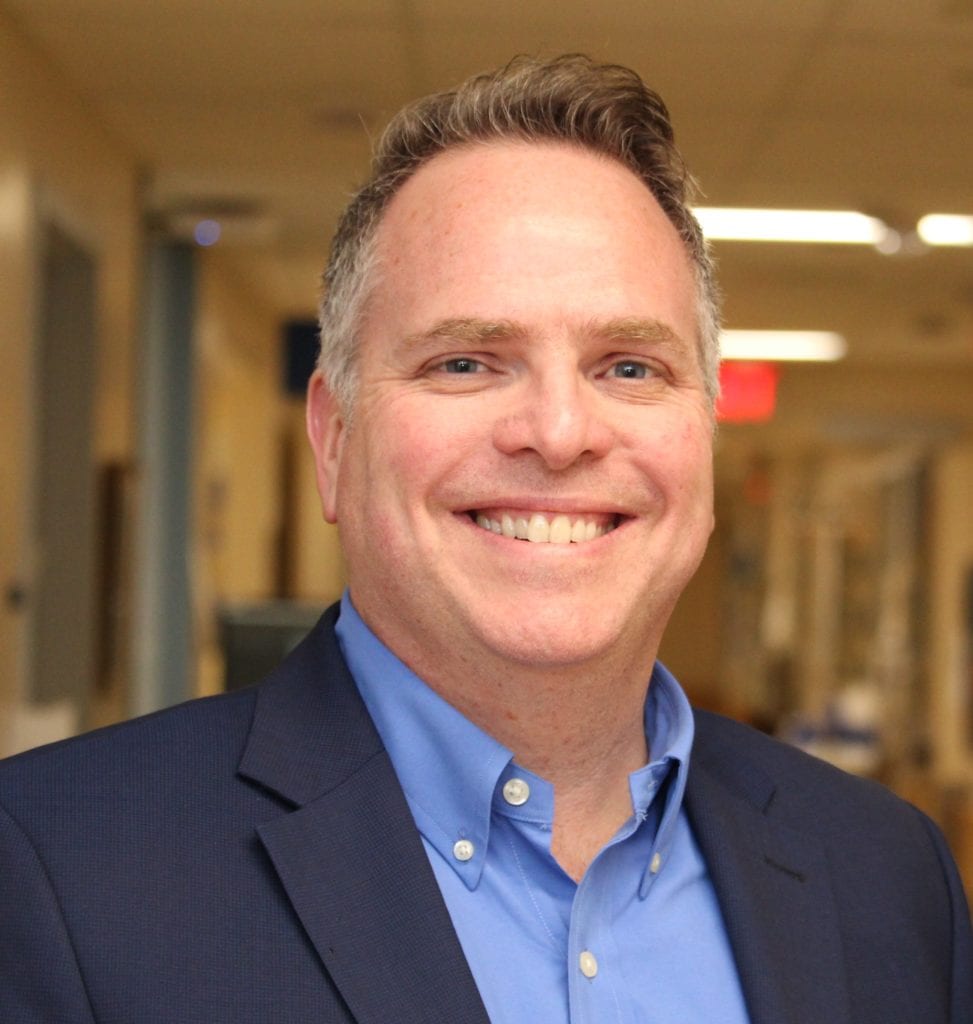
Michael McGillion
“There’s a lot of interest in virtual care, but it’s important that we understand its impact through high-quality research,” says McGillion. “At the PROTECT Lab, we’re studying what difference this model of care makes for patients. Through our research, we’re learning how these technologies and care models can work alongside traditional care to support recovery and improve the future of patient-centred care in Canada.”
Today, thousands of patients who have undergone surgery are benefiting from virtual care with remote monitoring through the PROTECT Lab. At the same time, researchers continue to build evidence on how technology can help more people recover safely and confidently at home.
-
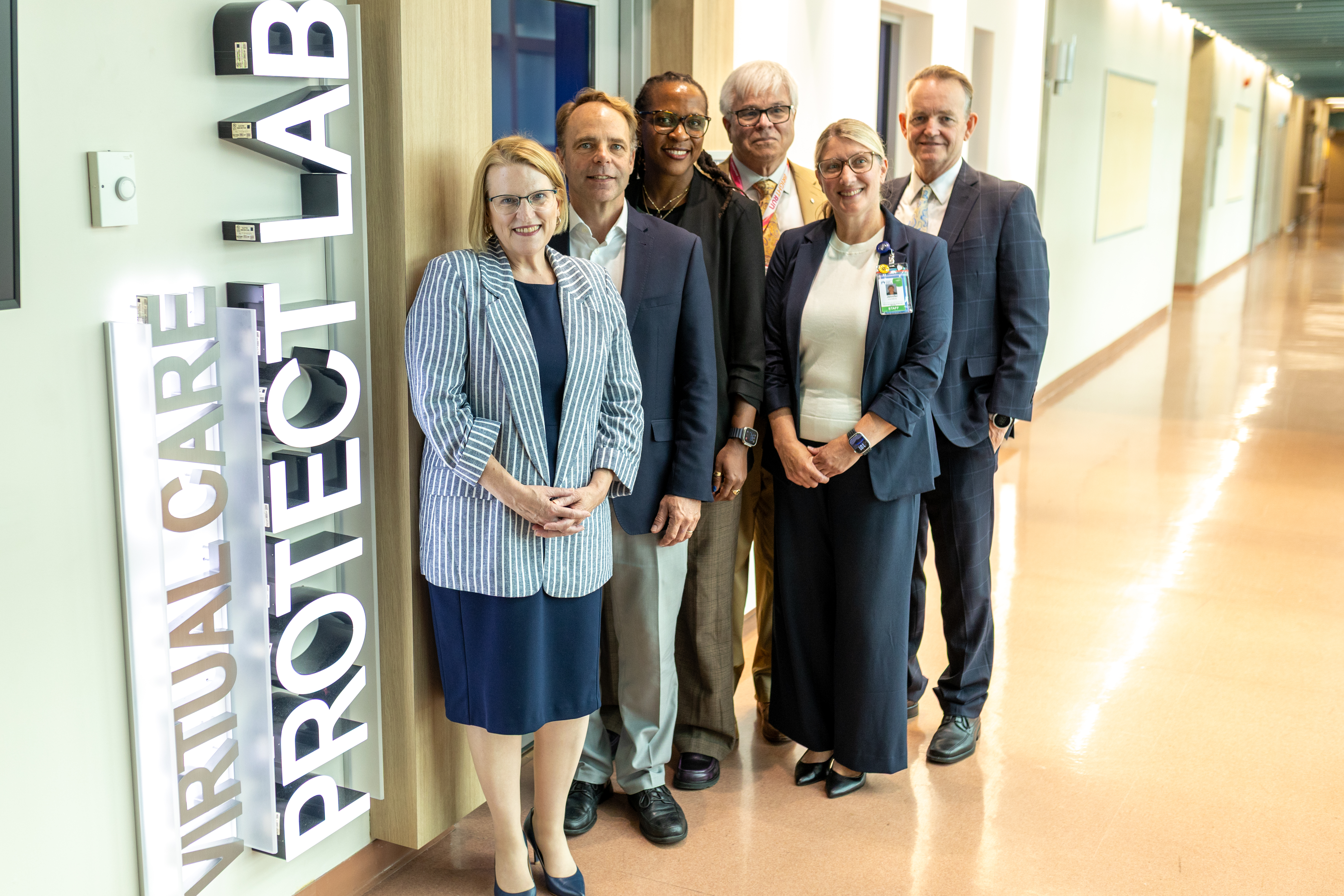
- Photos courtesy of HHS. Ontario’s Deputy Premier and Minister of Health Sylvia Jones, front left, toured the PROTECT Lab at HHS Juravinski Hospital and Cancer Centre, where patients are remotely monitored after they are discharged home. From left to right: Jones, Anthony Kaul, Dr. Sandra Ofori, Dr. Mark Levine, Jennifer Lounsbury, Ted Scott.