Women Behind the Research is a PHRI Q&A series published in recognition of International Women’s Day 2026. The series features PHRI researchers discussing the research they lead and contribute to, as well as their personal and professional reflections on International Women’s Day and careers in research.
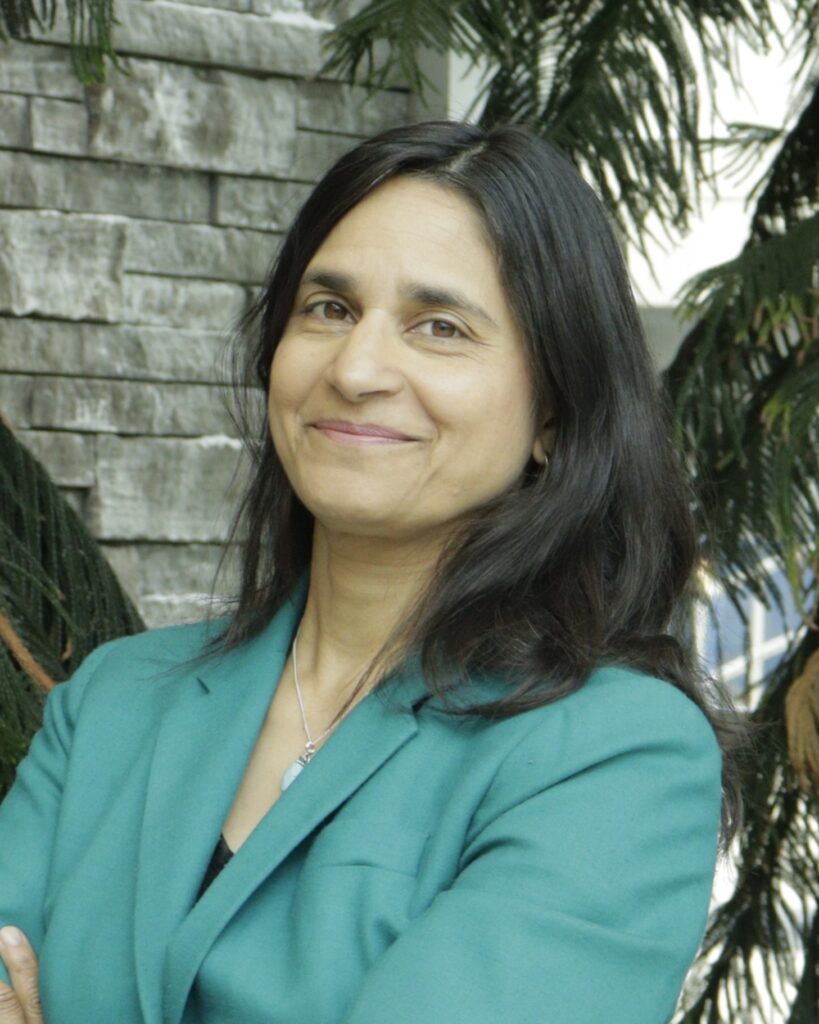
Sonia Anand
MEET SONIA ANAND
Sonia is a distinguished physician-scientist and global health leader whose work has transformed Canada’s approach to cardiovascular health, health equity, and Indigenous and population health research.
She is a senior scientist at PHRI, professor of medicine and epidemiology at McMaster University, director of the Chanchlani Research Centre, and associate vice-president, Global Health, at McMaster University.
What PHRI trials are you currently working on, and what health challenges or problems does your research aim to address?
Currently, I lead the CAHHM study, which is a large prospective cohort study in which we have embedded imaging using MRI. We are conducting repeat assessments in 2000 participants with the overarching goal of delineating pathways that connect ectopic adipose tissue to cognitive decline. The study considers pre-clinical vascular disease, biomarkers, and lifestyle factors, all situated within the broader context of social determinants that shape cardiometabolic health.
In addition, we recently completed the 10-year follow up for the South Asian birth cohort (START), which recruited 1,000 South Asian mothers during pregnancy and followed mothers and children for a decade. This study helps us understand how genetic and early life environmental exposures-including in utero and early childhood factors-contribute to early onset obesity, mental health trajectories, and metabolic disorders among a population at elevated cardiometabolic risk.
Across these programs, my research focuses on how ‘OMICS, sex/gender, ethnicity, and socioeconomic position intersect to influence cardiometabolic disease risk. A central aim of my work is to move beyond “one size fits all” approaches in medicine by generating evidence that supports population precision health, which leads to more precise risk assessment, and the development and testing of community-based interventions designed for populations traditionally underrepresented in health research.
What does International Women’s Day represent for you personally and professionally?
International Women’s Day offers meaningful space for reflection, recognition, and conversation about women’s roles and realities in society. I am inspired by my mother as she came to Canada as an immigrant fulfilling the need that existed in Canada in 1965 for more physicians, especially in Nova Scotia, and I am inspired by my sisters who continue to serve in Canada to improve gender equity.
The theme of embracing equity resonates deeply with my professional mission. It reflects not only the aspiration for gender equality, but also our collective responsibility to create conditions (social, structural, and scientific) that allow all women to flourish.
How has the landscape for women in research changed since you began your career?
When I began my career, women were significantly underrepresented in many areas of academic medicine and health research. Structural barriers, fewer mentorship pathways, and implicit biases were persistent features of the environment. For racialized women or those from socioeconomically marginalized backgrounds, these barriers are often compounded.
Over time, I have witnessed and been fortunate to contribute to a meaningful shift. Institutions have increasingly acknowledged the importance of diverse representation in research leadership, and the field has become more intentional about addressing inequities based on gender, ethnicity, and social position, although there is more work to do as illustrated in my recent paper. Research itself has evolved to better incorporate sex‑ and gender‑based analysis, community engagement, and equity‑driven frameworks.
Through my work as chair of the Equity, Diversity and Inclusion Committee for the Canadian Cardiovascular Society, and in leadership roles such as associate vice‑president, Global Health at McMaster University, I’ve seen how institutional commitment can accelerate change. Today, more women hold senior scientific roles, mentorship is more accessible, and there is greater recognition of the structural issues that shape women’s careers. While considerable progress has been made, more work remains. Particularly in ensuring that diverse women are represented, supported, funded, and empowered within the research ecosystem. But the direction is promising, and I am encouraged by the next generation of women scientists who are entering a landscape that increasingly values both their potential and their perspectives.
What excites you most about the future of women in science and beyond?
What excites me most is the way women, across diverse identities and backgrounds, are increasingly influencing scientific agendas and leading major research initiatives. Fields that once overlooked the importance of sex, gender, ethnicity, and social determinants are now recognizing that inclusive science produces better, more impactful science. Women are not only contributing to discovery; they are reshaping how that discovery happens. Our work is accelerating the shift toward patient centred, equity focused research and strengthening the evidence base for precision public health approaches that reflect the needs of real-world populations. The future of science will be more innovative, more equitable, and more responsive because women are helping to define it.