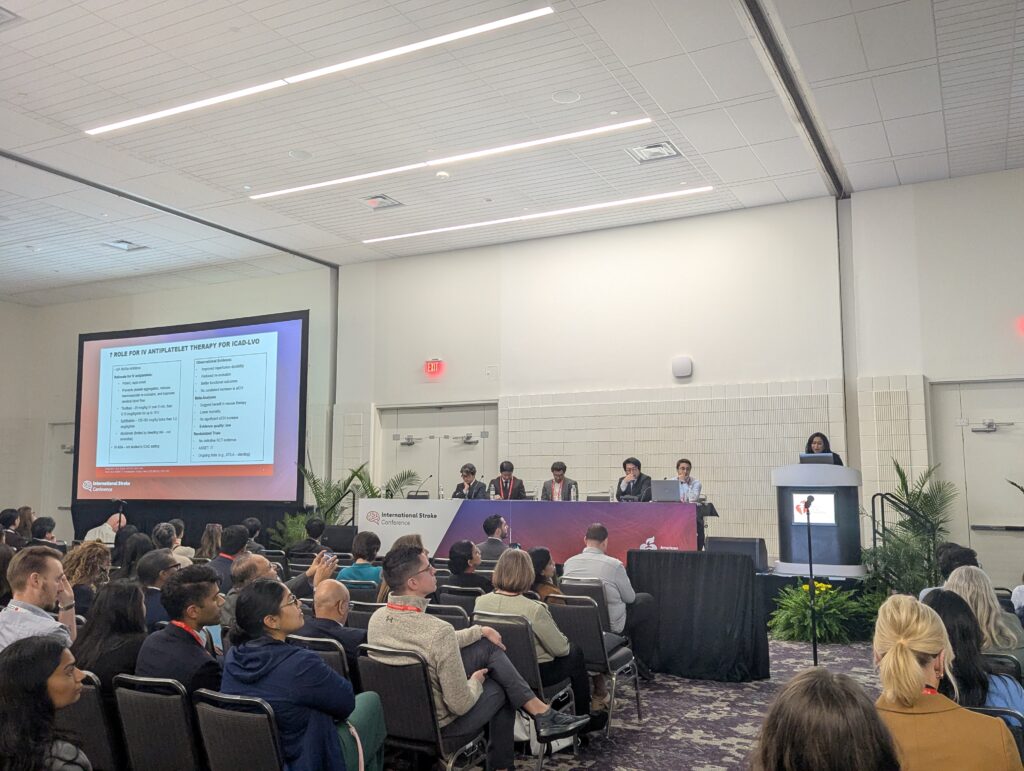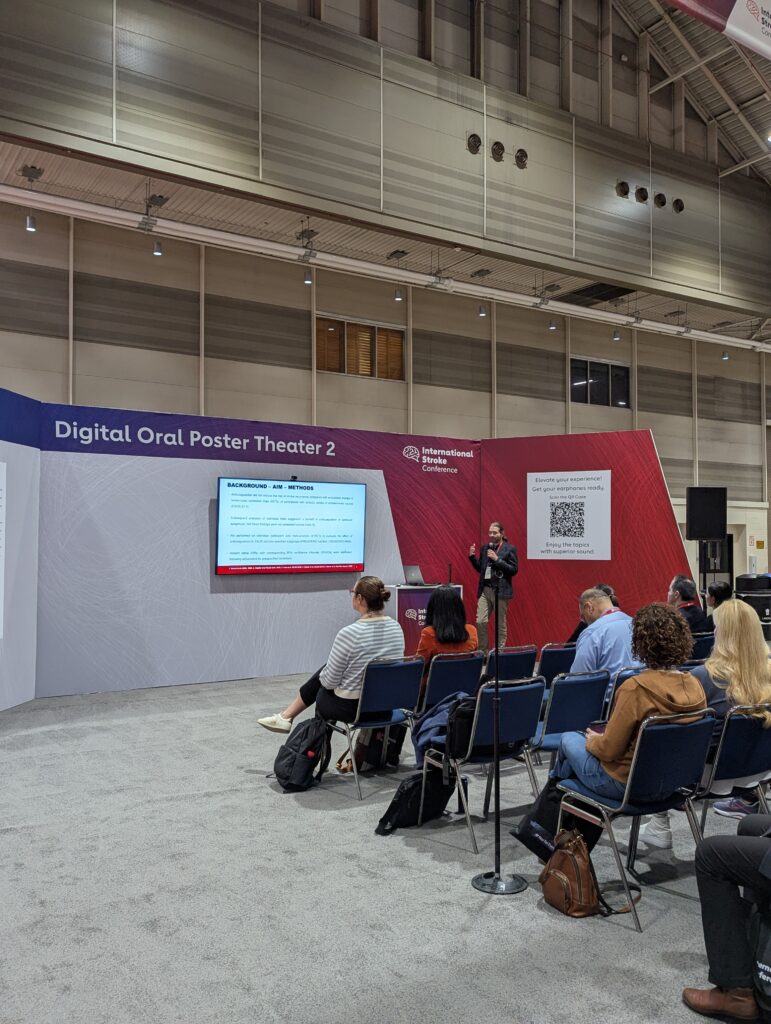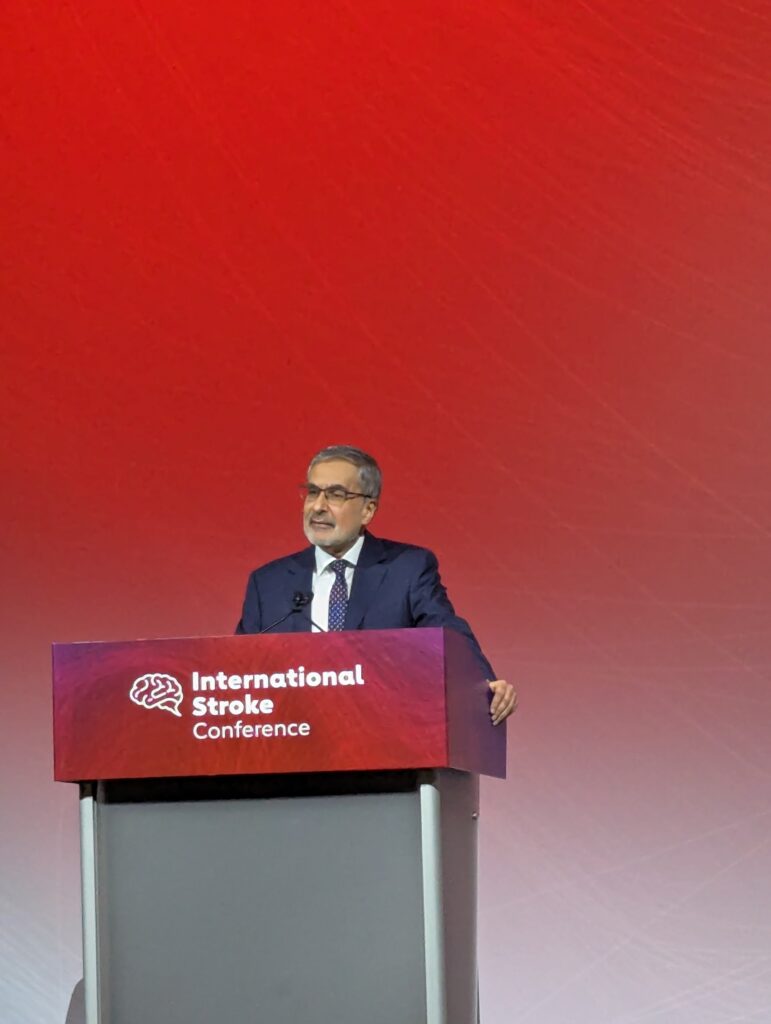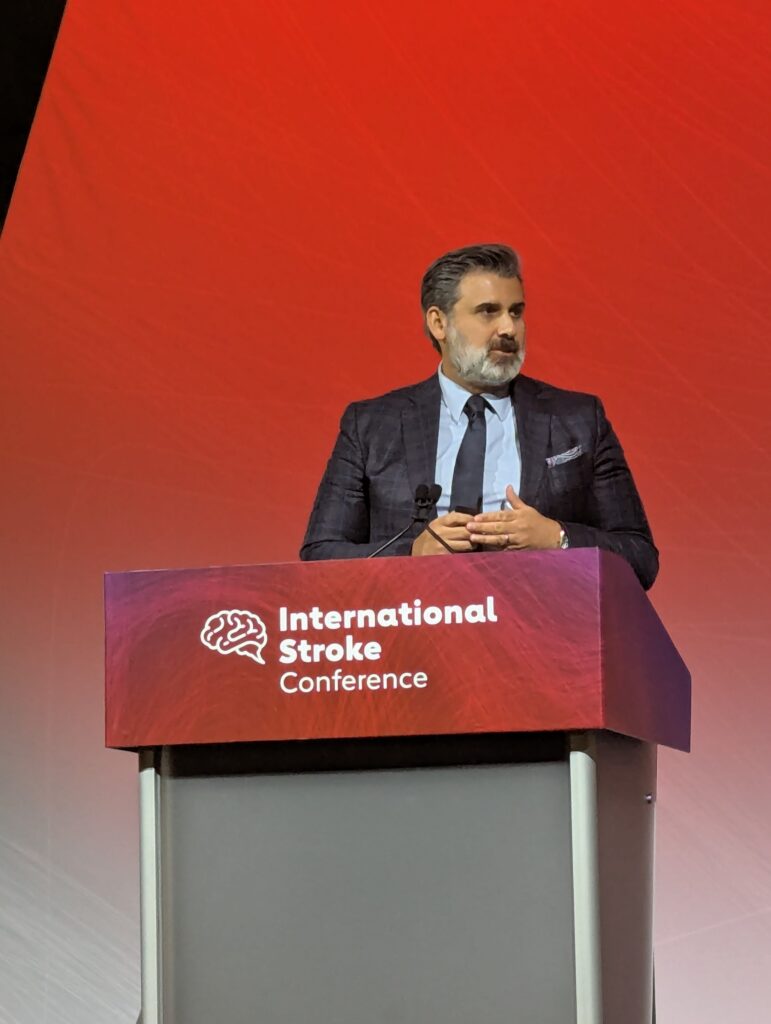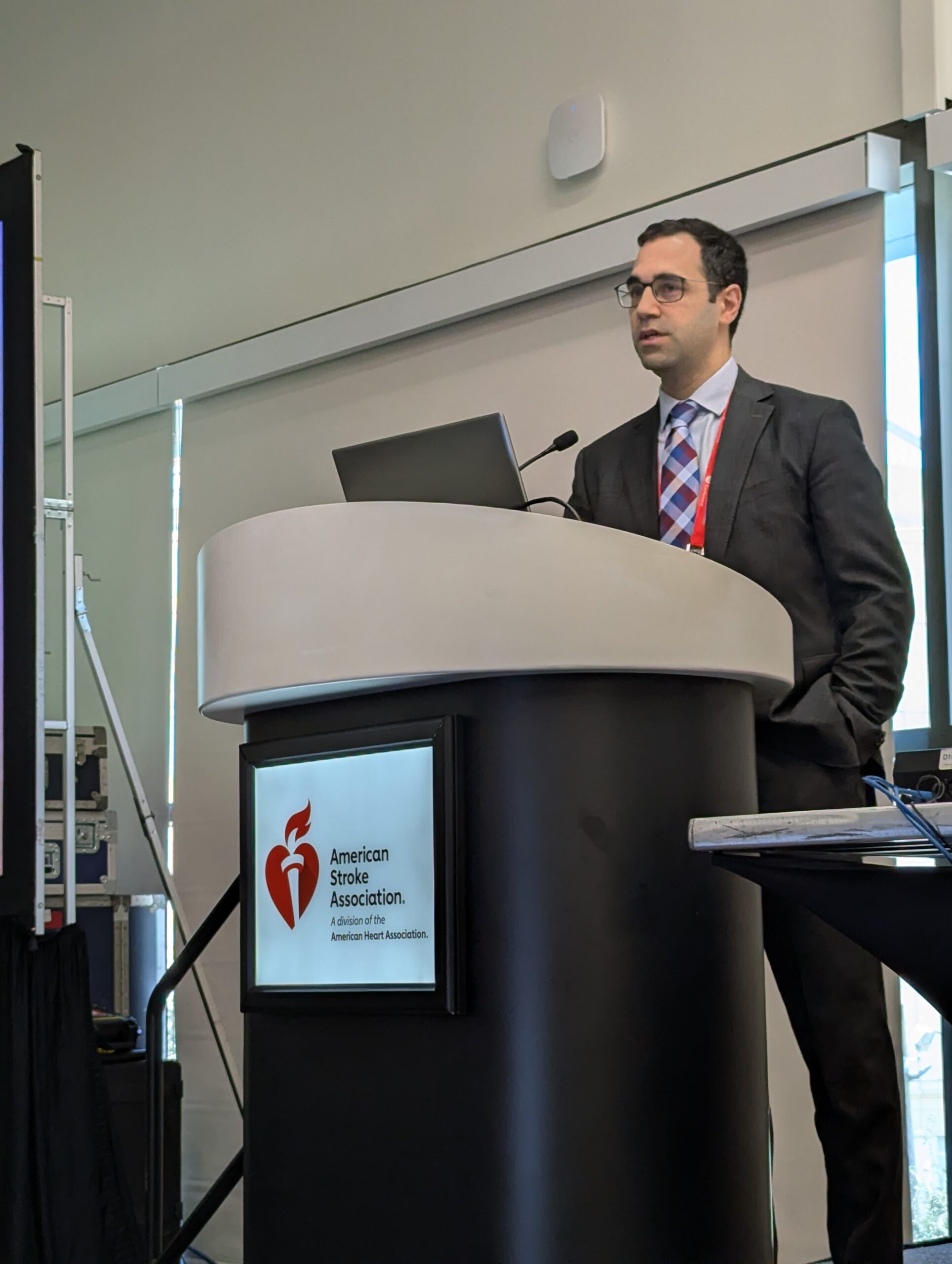
PHRI researchers shared new research and study updates on stroke prevention and care at the International Stroke Conference that took place on February 4-6 in
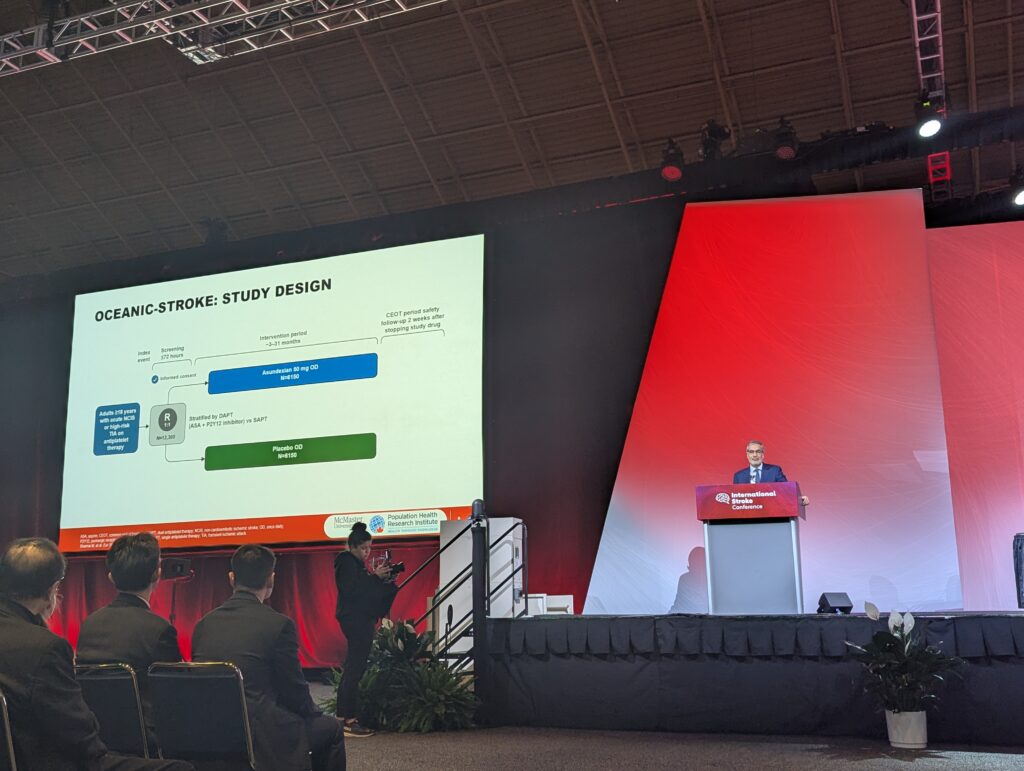
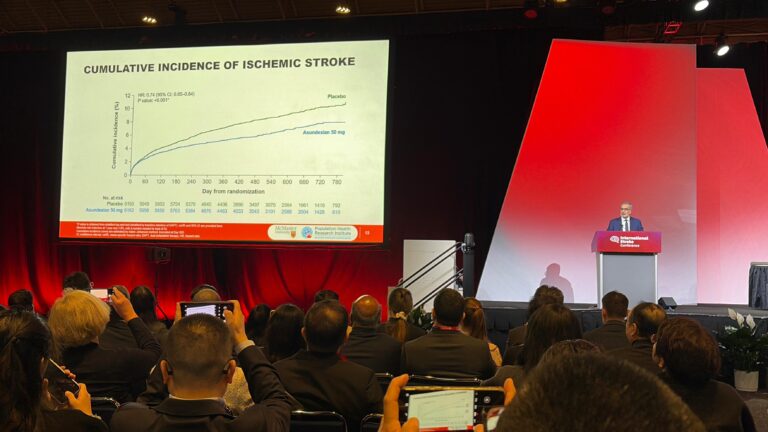
Senior Scientist Mike Sharma presented findings from the OCEANIC-STROKE study, which showed that asundexian, an investigational anti-clotting medication, reduced the risk of recurrent stroke by 26 per cent without increasing major bleeding in patients who had recently experienced a non-cardioembolic ischemic stroke.
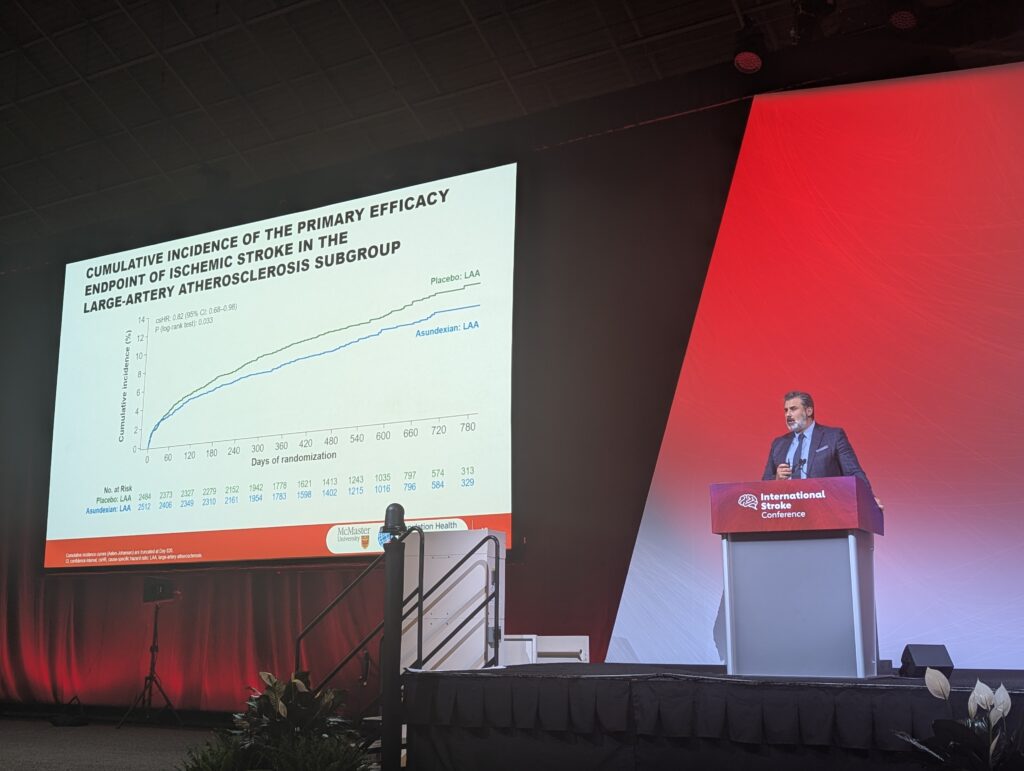
Senior Scientist Ashkan Shoamanesh presented a secondary analysis of the OCEANIC-STROKE study examining how different ischemic stroke subtypes respond to asundexian. He also presented findings from an individual participant data meta-analysis comparing direct oral anticoagulants with aspirin in patients with embolic stroke of undetermined source.
Scientist Sashi Perera presented the new PHRI CATIS-ICAS trial, an international Phase III randomized clinical trial evaluating whether rivaroxaban (2.5 mg twice daily) combined with aspirin is more effective than antiplatelet therapy alone in preventing recurrent stroke when started within 30 days of an acute ischemic stroke related to intracranial atherosclerotic disease.
Senior Scientist Guillaume Paré presented research exploring how polygenic risk scores may help guide decisions on aspirin and statin therapy in stroke prevention.
Scientist Aristeidis Katsanos presented an individual participant data meta-analysis comparing direct oral anticoagulants with aspirin in patients with embolic stroke of undetermined source.
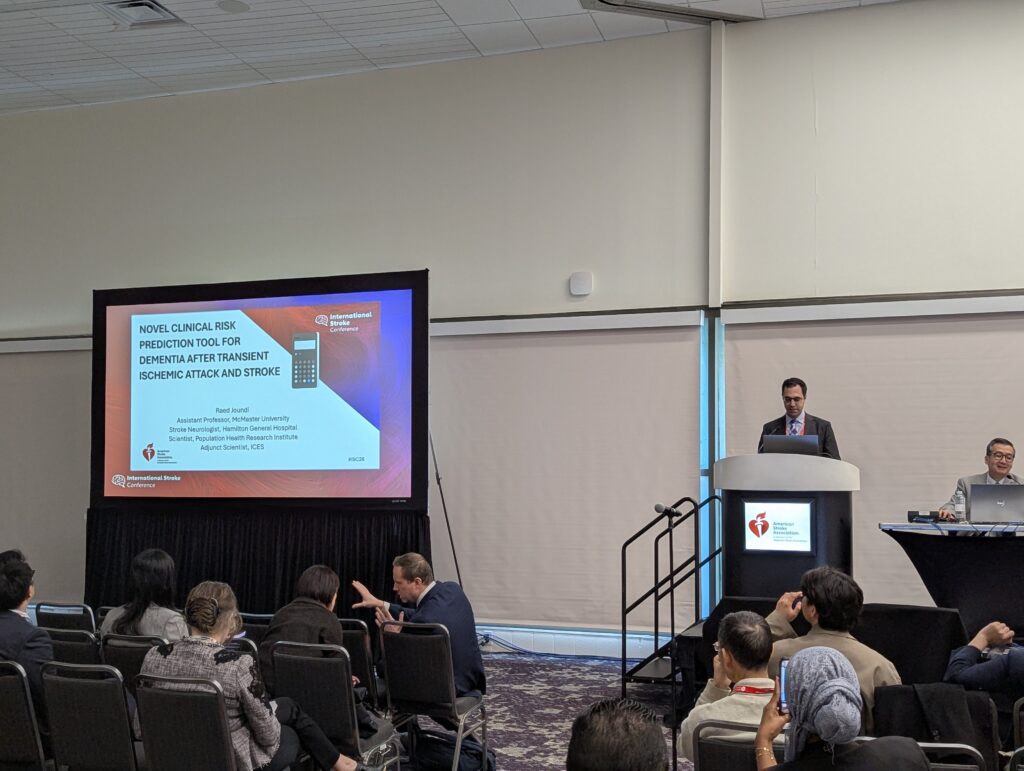
Scientist Raed Joundi presented a clinical risk prediction tool designed to estimate the risk of dementia following transient ischemic attack and stroke.